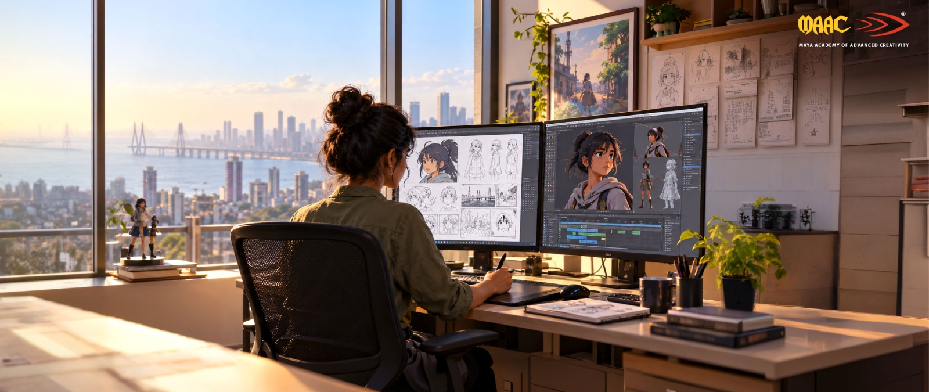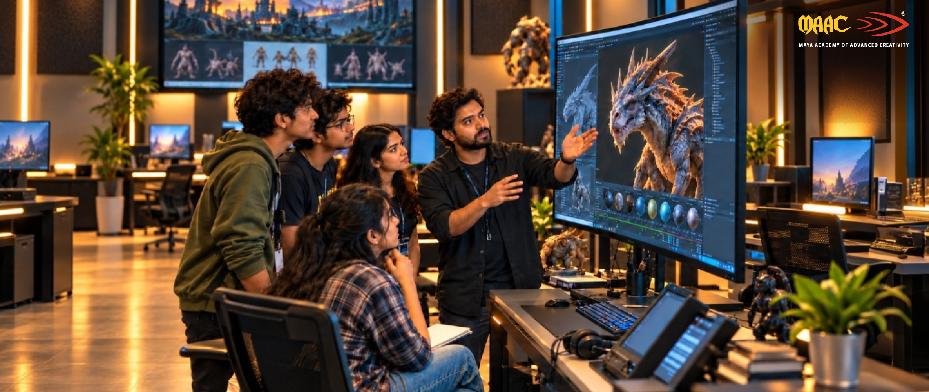


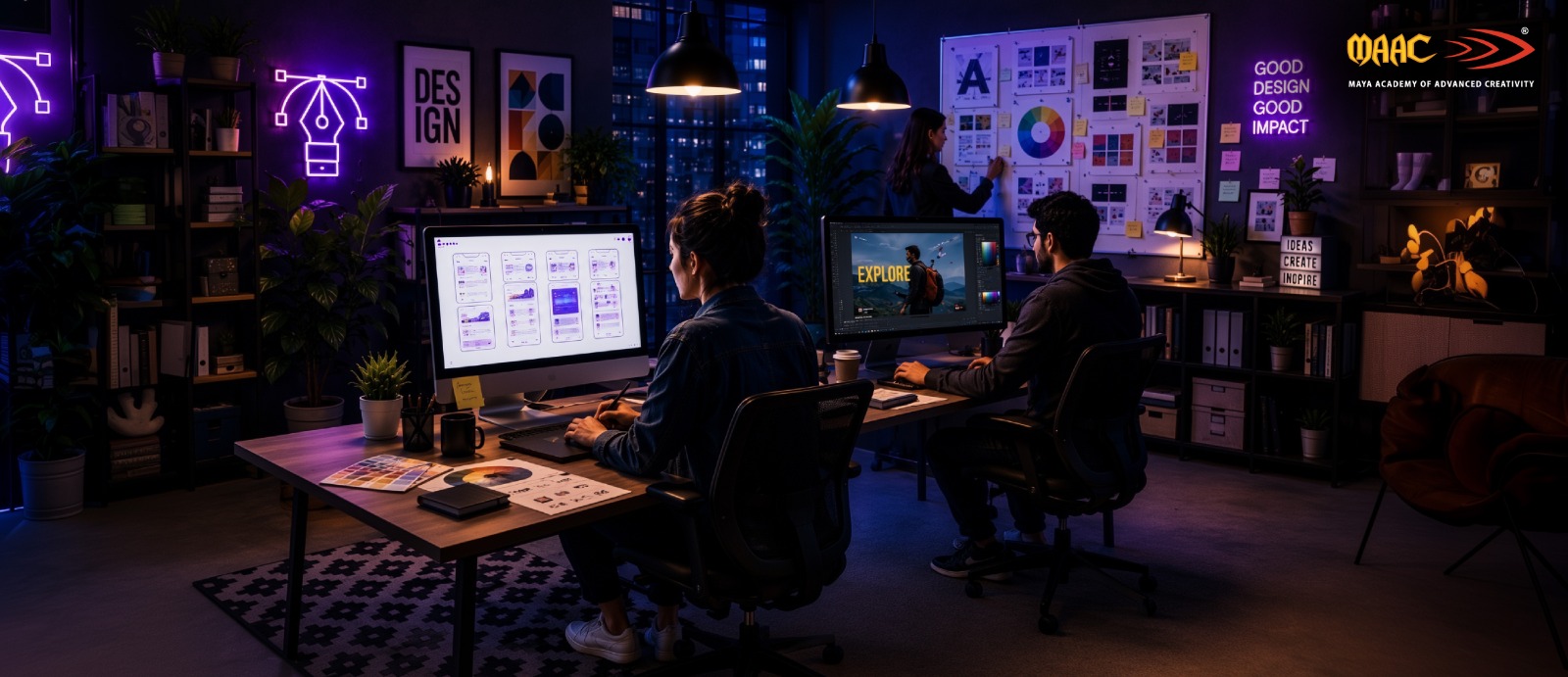
Graphic Design in 2026 doesn’t start with a pen, it starts with questions like “what is this design supposed to communicate? " and " how will it be experienced?”
Every interface today is designed to move and connect people in real time. This shift has redefined what a digital design course really means. It's no longer just about tools, but about understanding people, platforms, and behaviour within the world of digital media and design.
The growing importance of design visualisation is expanding what graphic design can be. Ideas today are no longer confined to flat screens but brought to life through 3d, motion, and interactive formats.
Institutions like Maya Academy of Advanced Creativity are shaping this future, preparing creators for a field that's no longer static.
As this field continues to evolve rapidly, advanced courses in UI/UX design have become essential for those serious about mastering the craft.
This blog can be your starting point, your first real step into the world of graphic design in 2026.
1. Skills you will learn in a Digital Design Course
2. Tools you need to master to build a career in Digital Media and Design
3. Career Paths to explore
1. Skills you will learn in a Digital Design Course
Graphic Design is one of the most exciting creative paths you can take and a digital design course is where it all begins.
A course builds creativity that goes beyond aesthetics, developing the ability to think visually and approach problems in fresh ways.
You master core design principles like balance, contrast, hierarchy, and composition forming your foundation, alongside developing communication and branding skills and learning to craft visuals that tell a story
Strategy and time management are also part of the journey, making you ready for the fast-paced industry.
Typography rounds out the skill set, the art of arranging text so that it's not only readable but visually compelling. Think spacing, sizing, hierarchy, and how different typefaces carry different emotions. It is one of the most powerful tools for setting tone and guiding the eye.
These are the skills you need to thrive as a digital designer and the best way to master them is through structured learning. A course at a reputed institute like MAAC gives you exactly that, guiding you step by step so no skills get left behind.
2. Tools you need to master to build a career in Digital Media and Design
To build a successful career in digital media and design, mastering the right software tools is essential, especially if you are planning to explore courses in UI/UX design.
Every graphic designer should be proficient in industry-standard software like Adobe Photoshop, Adobe Illustrator and Adobe InDesign. These tools form the foundation for photo editing, vector design and print layout.
In addition, platforms like Figma have become essential for UI/UX design, making them a core part of any modern UI/UX design course. They enable collaborative workflows and efficient interface creation while strengthening your design visualisation skills.
Mastering the right skills and tools is only half the journey. The real difference lies in how you curate them into a portfolio that shows your progress. Each new skill you learn should be added to your portfolio, so when it’s time to apply for a job, you’re already ready.
3. Career Paths to explore
You’ve mastered the tools and skills, so what can your career path look like?
Design today offers limitless possibilities. From web and mobile design, where you create seamless digital experiences, to print and layout design that brings ideas to life with precision and impact.
Choosing Marketing and advertising, means using your creativity to drive powerful storytelling that connects brands with audiences.
Specialising in brand identity and logo design is also a strong path, shaping how brands are seen and remembered. For those drawn to movement, animation and motion graphics offer a way to tell stories through visuals that come alive.
Stepping into product design means building solutions where the user comes first, from concept through to the final experience.
As the industry evolves, so do the opportunities. Today AI-assisted designers are also in demand, blending human insight with cutting-edge technology to unlock new dimensions of design.
If you value independence, you can choose to freelance and collaborate across industries and create on your own terms.
No matter which path you choose, the right training is essential. To succeed in today’s fast-evolving design industry, you need more than passion, you need structured learning and industry-relevant skills that the 21st-century job market demands.
At MAAC, you gain exactly that. With a curriculum designed to mirror real industry standards, you’re trained using the latest tools, techniques, and workflows that professionals rely on every day. Whether you’re looking for short-term courses to upskill quickly or comprehensive long-term programs to build a strong foundation, MAAC offers flexible options that fit your goals and schedule.
Your dream career starts with MAAC.
FAQs
1. What skills will I learn in a digital design course?
You’ll learn core design principles, visual storytelling, typography, branding and problem-solving, along with essential skills like strategy and time management.
2. Which tools do I need to master for a career in digital design?
Industry-standard tools like Adobe Photoshop, Illustrator, InDesign, and Figma are essential for building a strong foundation in digital media and UI/UX design.
3. Why is structured training important in graphic design?
Structured training ensures you learn the right skills in the right order, gain hands-on experience, and become industry-ready with practical knowledge.
4. What career options are available after a digital design course?
You can explore roles such as web and mobile designer, graphic designer, UI/UX designer, brand identity designer, motion graphics artist, product designer, or freelancer.
5. How does MAAC help in building a design career?
MAAC offers industry-aligned courses, expert guidance and practical exposure to help you develop skills, build a strong portfolio and prepare for real job opportunities.