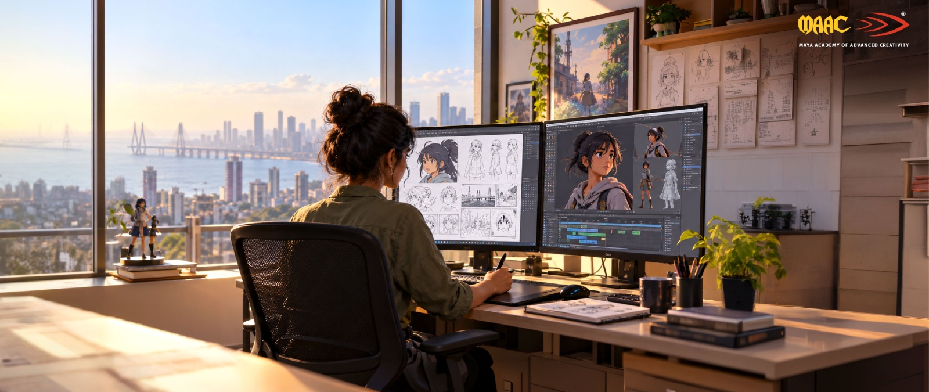


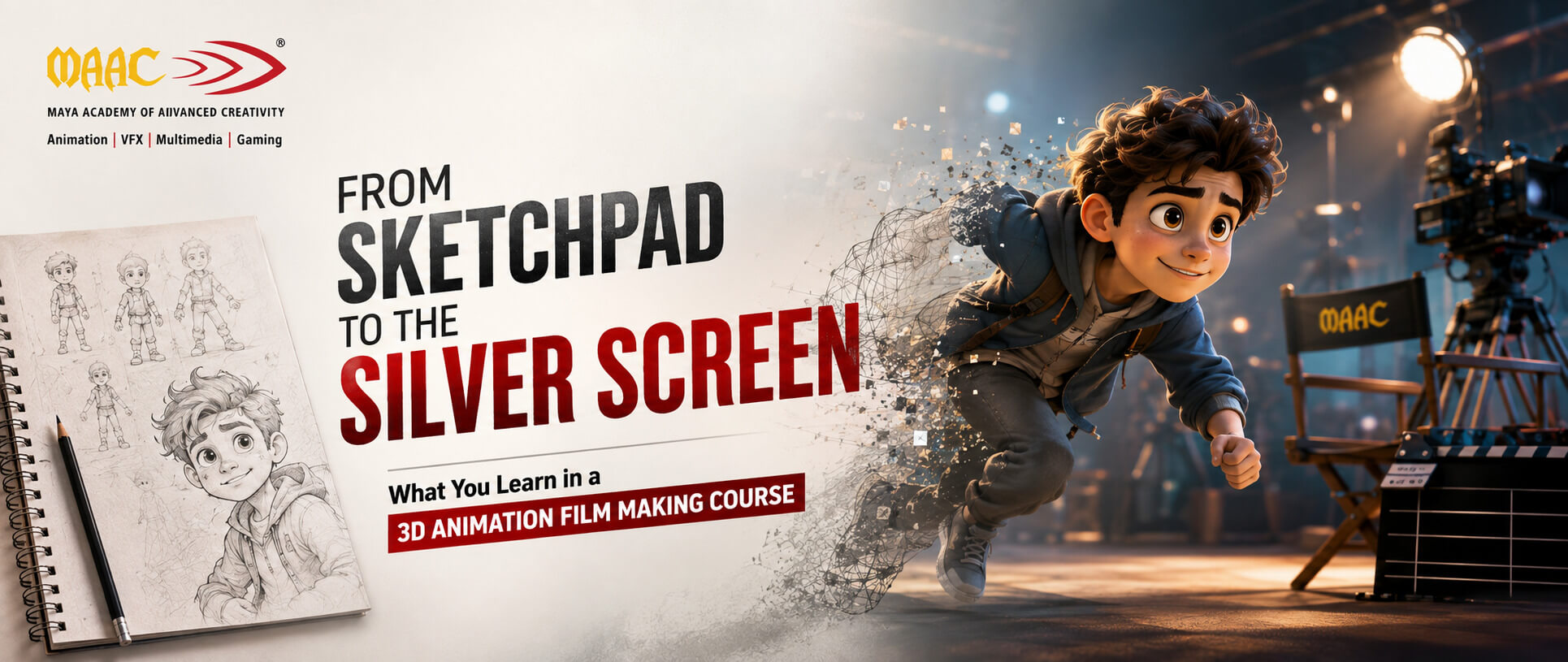
A character begins as a sketch. A world starts with a rough concept. A story that eventually appears on a screen may have started as nothing more than a few lines on a page.
The journey between the two is where 3D animation film making comes in.
Creating an animated film involves much more than knowing how to operate 3D software. It combines storytelling, design, technology, animation, cinematography, and problem-solving. A well-structured 3D Animation Film Making Course introduces you to this complete process and helps you understand how an idea gradually becomes a finished visual experience.
Where Every Animated Film Begins: The Story
Before a character is modelled or a scene is rendered, there has to be a story.
You begin by understanding the fundamentals of visual storytelling, including story development, character concepts, storyboarding, composition, and scene planning. Storyboards help artists visualise camera angles, character movements, expressions, and the overall flow of a sequence before production begins.
This stage is important because strong animation isn't only about how something looks. It is also about whether the audience understands what is happening and connects with the story.
Understanding the 3D Animation Pipeline
A film may look seamless on screen, but creating it involves several different stages and specialisations.
A 3D animation course introduces you to the production pipeline, which can include:
- Pre-production and storyboarding
- 3D modelling
- Texturing and shading
- Character rigging
- Character animation
- Lighting
- Rendering
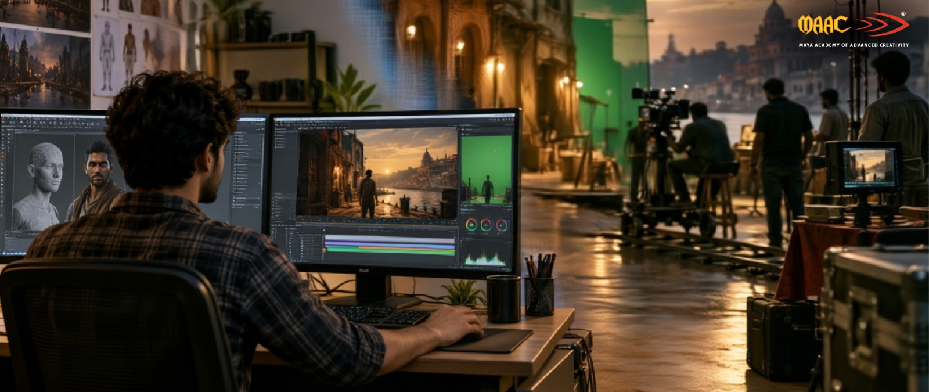
- Compositing and post-production
Learning these stages together gives you a clearer picture of how an animation studio operates and how different artists contribute to one final project.
Bringing Characters to Life
A well-designed character can tell a story without saying a word.
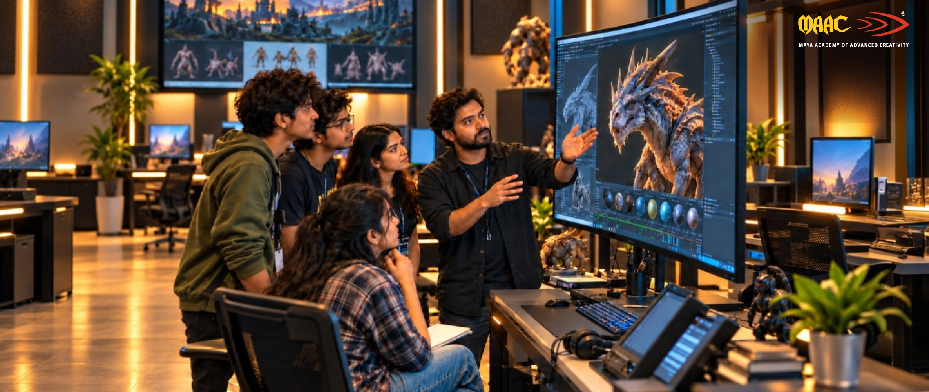
You learn how characters are built in 3D, from modelling their form and creating textures to preparing them for movement through rigging. Animation then adds the final layer movement, expressions, gestures, timing, and personality.
This is where technical knowledge meets observation and creativity. A simple change in posture or expression can completely alter how a character feels on screen.
Creating Worlds Beyond the Screen
Characters need environments to inhabit, and those environments play a major role in storytelling.
Whether it is a futuristic city, an imaginary landscape, or a realistic interior, you learn how 3D environments are developed using modelling, texturing, lighting, and composition.
Relevant 3D Animation, VFX, and Multimedia course buckets can help you explore these areas while understanding how environments contribute to the mood, scale, and visual language of a film.
Working With Industry-Relevant Tools
Software is an important part of the animation workflow, but knowing how to use a tool is just the beginning.
Depending on the course and specialisation, you can gain exposure to industry-relevant software such as Autodesk Maya, Blender, Adobe Photoshop, Substance 3D tools, and Unreal Engine.
The focus is on using these tools to solve creative problems whether that means building a character, designing an environment, creating realistic materials, animating a scene, or developing a real-time visual experience.
Developing Skills Beyond the Software
Animation is a collaborative industry. Technical skills matter, but they are only one part of becoming a successful creative professional.
A good animation learning experience also develops:
- Visual and creative thinking
- Storytelling
- Problem-solving
- Attention to detail
- Collaboration
- Time management
- Ability to work with feedback
- Understanding of production workflows
These skills become particularly valuable when you move from individual assignments to larger, team-based projects.
Learning by Creating
One of the most important parts of animation education is practical experience.
Instead of simply learning what a modelling tool or animation principle does, you can apply those skills through projects. Creating characters, environments, animated sequences, short films, or VFX shots allows them to understand the challenges that come with actually producing visual content.
These projects can also contribute to a portfolio or showreel, giving you something tangible to present when applying for internships and entry-level opportunities.
What Can You Do After a 3D Animation Course?
The animation industry brings together artists with different areas of expertise. Depending on their interests and specialisation, you can explore roles such as:
- 3D Animator
- 3D Modeller
- Character Artist
- Environment Artist
- Lighting Artist
- Rigging Artist
- VFX Artist
- Compositor
- 3D Generalist
Some professionals may specialise in one discipline, while others build broader skills across the production pipeline.
Choosing the Right Course
Not every animation course offers the same learning experience. When choosing a 3D Animation Film Making Course, you should look beyond the list of software and consider the larger learning journey.
Does the course cover the animation pipeline? Does it include practical projects? Does it help build a portfolio? Does it introduce you to current workflows and technologies? Does it allow you to explore different areas before choosing a specialisation.
As an aspiring artist, exploring MAAC's Animation & Multimedia, 3D Animation, VFX, and related course buckets can help you understand the different learning and career pathways available in the creative industry.
From Sketchpad to the Silver Screen
The distance between a sketch and a finished animated film is filled with ideas, iterations, technical challenges, creative decisions, and countless hours of work.
A 3D Animation Film Making Course can provide the foundation to navigate that journey from developing the first concept and building characters to creating environments, animating scenes, and producing a final visual story.
Because at its core, animation is not simply about making objects move. It is about taking something that exists in your imagination and giving it a world, a personality, and a story that others can experience.
FAQ
- What do you learn in a 3D animation course?
Ans - You learn visual storytelling and storyboarding, the stages of the production pipeline, character and environment building, industry-standard software, and soft skills like collaboration, feedback handling, and time management.
- Do you need drawing skills to learn 3D animation?
Ans - Not necessarily — the course starts with story and concept fundamentals like storyboarding and composition, which build visual thinking even if you're new to drawing.
- What jobs can you get after a 3D animation course?
Ans - Common roles include 3D Animator, 3D Modeller, Character Artist, Environment Artist, Lighting Artist, Rigging Artist, VFX Artist, Compositor, and 3D Generalist.
- Do 3D animation courses help build a portfolio or showreel?
Ans - Yes — practical projects like short films, character builds, or VFX shots are typically designed to double as portfolio pieces for internships and entry-level roles.
- What skills besides software do animation courses teach?
Ans - Problem-solving, attention to detail, collaboration, time management, taking feedback, and understanding production workflows — skills that matter once you move to team-based projects.